Imaging Violence
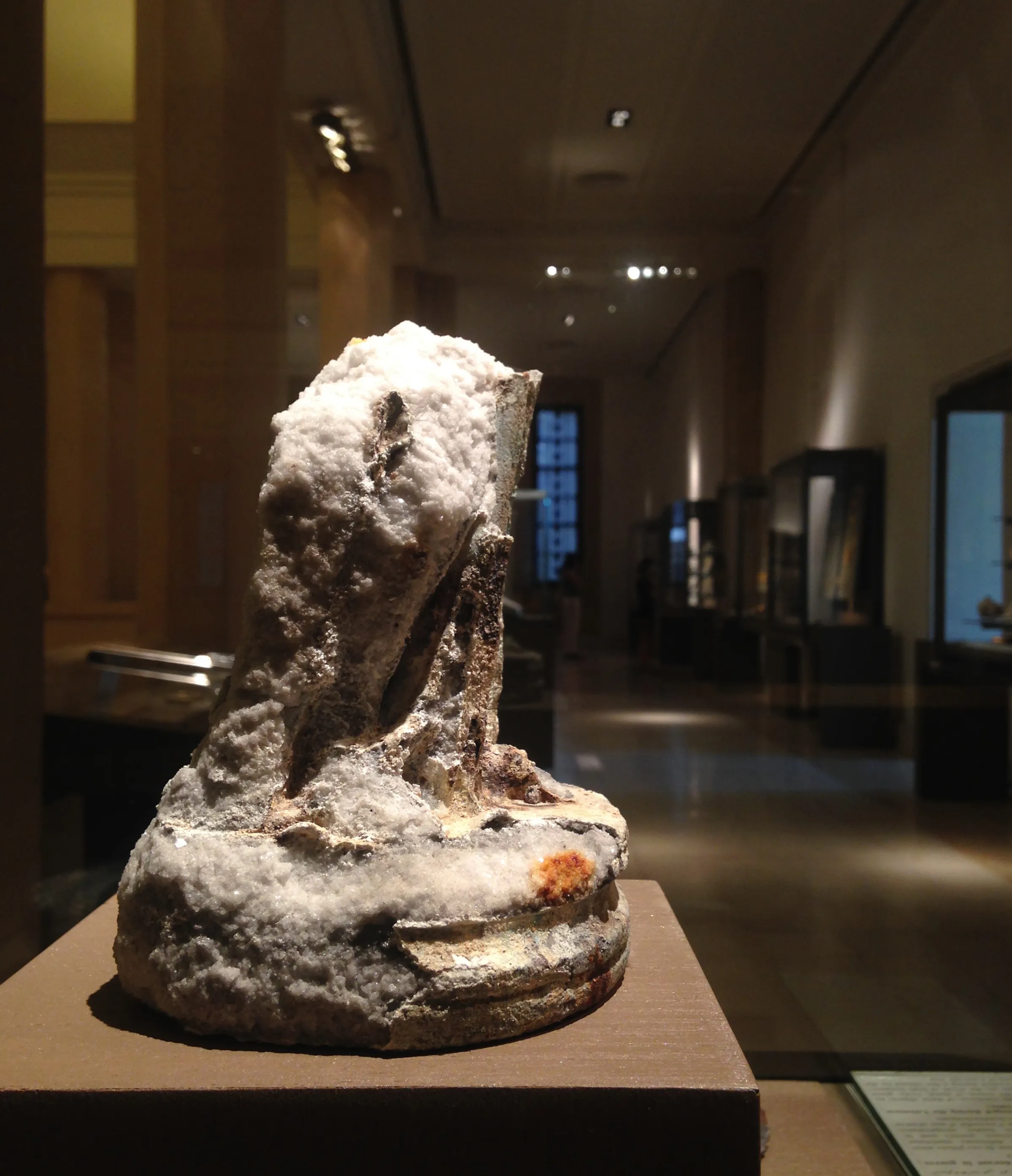
An objects from the collection of the National Museum (Lebanon), damaged by fire during the civil war. Photo by Natasha Marie Llorens
Imaging Violence is a curatorial research project that asks: can we develop both a language and means of representation to describe violence in a more complex way? What is the distinction between the representations of political violence and those of non-political forms of violence? Imagining Violence is rooted in an underlying assumption that art has the potential to re-frame our understanding both of public manifestations of violence and of intimate or structural forms and thus to provide conceptual tools and information to assess its legitimizing or de-legitimizing narratives. This project comes out of my doctoral research on the Algerian War of Independence. This on-going academic work focuses on representations of revolutionary violence in Algerian national cinema between 1965 and 1979 and raised questions about how contemporary artworks grapple with the same problems—not only in Algeria or in the Arab cultural landscape more broadly, but also in the effect these cultural scenes have on hegemonic debates about representation.
My research residency at Marra Tein in the summer of 2015 was focused mostly on studio visits. I had initially planned to do a call and response—to screen a series of videos from the context in New York where I was based, followed by a conversation with people based in Beirut. But in my first few days in Beirut I realized that the representations of violence I found the most urgent were focused on the disappearance of the City by aggressive development, while the video work I had proposed to screen was more centered on the body. The difference is significant.
This research developed into three significant short-term projects: an undergraduate course on post-war art and politics in Beirut at the New School in New York for the spring term, a text pending publication, “Absent Beirut,” and an exhibition of contemporary artwork on the disappearance of New York and Beirut at the Aronson Gallery scheduled for September 2016.
BIO:
Natasha Marie Llorens is a writer and independent curator based in Marseille and New York. Currently, she is focused on two long-term research project, one of violence and representation and the other on contemporary painting. Recent projects include, “The Phallus and the Word,” for Contemporary Art Stavanger, Frames of War at Momenta Art in Brooklyn, Syntagma at the Skybridge Art Space at Eugene Lang in Manhattan, and vois-tu pas…que je brûle? (do you not see…) at the Essex Street Market, produced in collaboration with the Artists Alliance. Llorens is a graduate of the Center for Curatorial Studies at Bard College and a Ph.D. candidate in art history at Columbia University.